IMPORTANT SAFETY INFORMATION
CONTRAINDICATIONS
ORZEYFULTM is contraindicated in patients taking strong CYP3A inhibitors.
WARNINGS AND PRECAUTIONS
Insomnia: In pooled phase 3 studies in patients with NT1, 60%, 55%, and 1% of patients in the ORZEYFUL 2 mg twice daily, ORZEYFUL 1 mg twice daily, and placebo groups, respectively, developed insomnia. Prior to ORZEYFUL treatment initiation, inform patients about the risk of insomnia at initiation of treatment. If insomnia persists beyond 7 days and significantly impacts daytime functioning or quality of life, consider ORZEYFUL dosage reduction or discontinuation.
Urinary Frequency and Urgency: ORZEYFUL may cause or worsen urinary frequency and urgency. In pooled phase 3 studies in patients with NT1:
- 58%, 53%, and 5% of patients in the ORZEYFUL 2 mg twice daily, ORZEYFUL 1 mg twice daily, and placebo groups, respectively, developed urinary frequency.
- 16%, 15%, and 1% of patients in the ORZEYFUL 2 mg twice daily, ORZEYFUL 1 mg twice daily, and placebo groups, respectively, developed urinary urgency.
These lower urinary tract symptoms are consistent with ORZEYFUL’s mechanism of action through agonism of the orexin receptor 2 (OX2R) on central micturition pathways. Prior to initiation of ORZEYFUL treatment, inform patients about the risk of urinary frequency and urgency and screen for lower urinary tract symptoms. Monitor ORZEYFUL-treated patients with a history of overactive bladder for worsening urinary tract symptoms.
Creatine Phosphokinase Elevations: In pooled phase 3 studies in patients with NT1, asymptomatic creatine phosphokinase elevations >5x ULN were observed in 11% (21/196) of ORZEYFUL-treated patients and 5% (4/76) of placebo‑treated patients. Two of these cases were characterized by markedly elevated CPK and transaminase levels; both patients discontinued treatment. None of the cases were associated with myoglobinuria or renal impairment. Advise patients to report unexplained muscle pain, weakness, or dark urine, particularly when engaging in vigorous physical activity or taking concomitant drugs associated with myotoxicity.
ADVERSE REACTIONS
The most common adverse reactions (incidence ≥5% and greater than placebo) reported in phase 3 studies with ORZEYFUL were insomnia, pollakiuria, micturition urgency, and salivary hypersecretion.
DRUG INTERACTIONS
- Concomitant use with strong or moderate CYP3A inhibitors increases oveporexton exposures, which may increase the risk of ORZEYFUL-associated adverse reactions
- Concomitant use of strong and moderate CYP3A inducers can increase oveporexton metabolism and decrease plasma levels of oveporexton, which may decrease the effectiveness of ORZEYFUL
USE IN SPECIFIC POPULATIONS
Pregnancy: There is a pregnancy exposure registry that monitors pregnancy outcomes in women who are exposed to ORZEYFUL during pregnancy. Patients should be encouraged to enroll in the ORZEYFUL pregnancy registry if they become pregnant. To enroll or obtain information from the registry, patients can call 1-877-371-0309. Available data from clinical trials with ORZEYFUL use during pregnancy are insufficient to identify a drug-associated risk of major birth defects, miscarriage, or other adverse maternal or fetal outcomes.
Lactation: There are no data available on the presence of oveporexton in human milk, the effects on the breastfed infant, or the effects on milk production. Animal studies indicate that oveporexton was present in the milk of lactating rats. When a drug is present in animal milk, it is likely that the drug will be present in human milk.
Hepatic Impairment: Avoid use of ORZEYFUL in patients with severe hepatic impairment (Child-Pugh C), as it has not been studied in this population.
Renal Impairment: Avoid use of ORZEYFUL in patients with severe renal impairment on dialysis (eGFR <15 mL/minute), as it has not been studied in this population.
DRUG ABUSE AND DEPENDENCE
ORZEYFUL contains oveporexton, a Schedule IV controlled substance.
ORZEYFUL has potential for abuse and misuse. Carefully evaluate patients for a recent history of drug abuse, especially those with a history of CNS stimulant, and follow such patients closely, observing them for signs of misuse or abuse of ORZEYFUL.
INDICATION
ORZEYFUL is indicated for the treatment of narcolepsy type 1 (narcolepsy with cataplexy) in adult patients.
DOSAGE FORM AND STRENGTHS
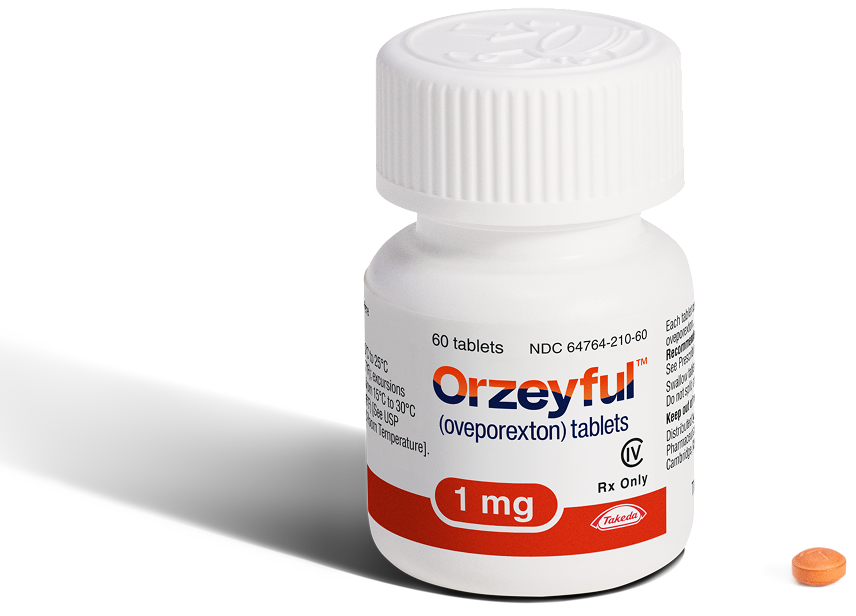
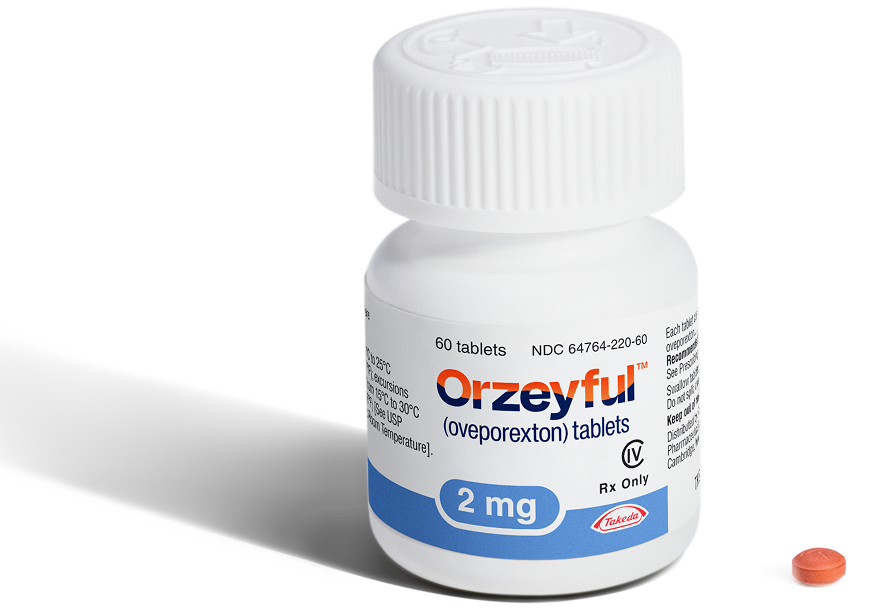
- ORZEYFUL tablets: 0.5 mg, 1 mg, and 2 mg.